Remembering Forward
Jamie Geer Unlocks the Signal Your Future Self Is Already Sending — And Why Most High Performers Never Hear It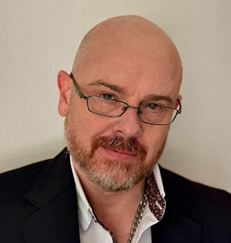
Jamie Geer should not be alive.
On November 15, 2023, while playing softball, he suffered a brain aneurysm that collapsed his life in a matter of seconds. He does not remember the moment itself. Everything he knows about that day has been reconstructed from the people who were there—how he clutched his head, how the sound he made stopped play across multiple fields, how he fell hard enough to dislocate his shoulder, and how quickly the situation escalated from a local emergency to an airlifted crisis. A doctor happened to be on the field. So did an ER nurse. Within minutes, Geer was in an ambulance. Shortly after, he was in a helicopter. Before takeoff, those around him stopped and prayed. It was, by all accounts, the day he died.
It was not the day he left.
He spent the next 31 days in a medically induced coma. The condition was severe. His intracranial pressure rose to levels that raised concern his brain could be irreparably damaged by its own swelling. Surgeons intervened repeatedly, placing a stent and installing a permanent shunt to drain fluid from his brain. At multiple points, his survival was considered unlikely. On the fourth such instance, medical staff exhausted their options and made the decision to remove life-sustaining support. Family gathered. The machines were turned off. And Geer continued breathing.
When he emerged from the coma, recovery did not resemble a return to normalcy. It was closer to reconstruction. He had to relearn basic functions: speech, swallowing, posture, movement. His body had deteriorated to the point where he no longer recognized himself. He recalls seeing his reflection for the first time while suspended in a rehabilitation lift—a moment that marked not clarity, but confrontation. He did not recognize the person in the mirror, and there was no immediate sense that he ever would. The timeline for recovery was conservative. He was told to expect nearly a month in rehabilitation before he could function independently. He left in eighteen days.
Within 114 days of the aneurysm, Geer returned to full-time work as a software engineer, performing at the same level he had prior to the event. His neurologist would later describe him as a medical anomaly. That designation, while accurate, only accounts for part of what occurred. The more significant shift began after the visible recovery had already taken place. In the months that followed, Geer found himself awake for long stretches at night. Sleep was inconsistent, medication side effects were severe, and his personal life was under strain. It was during this period—removed from the structured environment of the hospital—that something unusual began to happen.
He started experiencing what he initially described as memories. They were not fragments of the past. They did not correspond to anything he had lived through. Instead, they presented as fully formed scenes—coherent, sensory, and specific. He could hear sounds, feel textures, and observe environments with a level of detail that made them difficult to dismiss. The content was equally disorienting. He saw work he had not done, conversations that had not taken place, and systems he had not built. Most notably, he began writing code in a programming language he had never formally studied. At first, he did not attempt to explain it. He documented it. Working from his phone, he recorded what he was experiencing in real time.
When he later tested fragments of that code, he discovered it corresponded to Dart, a language used for cross-platform mobile development. It was not part of his training. He had never learned it. The pattern repeated. He would receive something structured, act on it without fully understanding it, and observe that it produced functional, real-world results. Books were written. Software was built. Not eventually. Not hypothetically. Immediately.
The consistency of those outcomes forced a reframing.
Geer does not describe the experience as imagination, intuition, or inspiration. He refers to it as a process he eventually named Remembering Forward.
The premise is direct: the version of a person that exists in their future is not hypothetical. It is coherent, complete, and already in motion. What most people interpret as ambition or desire may, in some cases, be the recognition of that existing state. The work, then, is not to construct a future, but to align with one.
In Geer’s words, “Your future self is already broadcasting. When your consciousness aligns with that signal through attention, emotion, and action, you don’t invent a new life. You receive the one that’s already yours.” The distinction separates his framework from conventional personal development models. It does not rely on visualization, affirmation, or forced optimism. It requires discernment—an ability to differentiate between what is appealing and what is accurate—and a willingness to act on information before it is fully explained.
The framework itself emerged not from theory, but from repetition. Over time, Geer recognized a sequence in his behavior that could be articulated and taught. He formalized it as the SHIFT Method:
Still the Mind Harmonize the Frequencies Identify the Nexus Self Follow the Forward Memories Transmit into the Physical
Each step reflects a phase of alignment, from quieting external noise to executing decisions that bring internal recognition into physical reality. The credibility of the framework rests not on its language, but on its outcomes.
Since his recovery, Geer has returned to full-time engineering work, written and published multiple books, developed software applications, launched several digital platforms, and created a fragrance line built around the same principles of proximity and subtle influence. He has also released a body of music tied to his experience, establishing himself as a published artist. None of these efforts were positioned as speculative. They were executed as extensions of something he describes as already in motion.
Geer does not position his work for those in immediate crisis. His audience is narrower and, in many ways, more difficult to reach: individuals who are externally functional but internally misaligned. Professionals who meet expectations, maintain stability, and continue progressing—while sensing that the trajectory itself is slightly off. The question he addresses is not how to rebuild a life, but how to recognize when a life no longer fits.
His claim is not that change requires destruction. It requires attention.
“You don’t need to start over,” he says. “You need to learn how to listen.”
Most people don’t resist change because they lack capability. They resist it because of fear.
Fear of the cost.
Fear of not knowing what they’re doing.
Fear of failing publicly, or getting it wrong.
From the outside, following the signal often looks like risk.
From the inside, it doesn’t feel new. It feels familiar—like returning to something that already fits, even if it hasn’t been lived yet. That distinction matters.Because when the action aligns with what is already coherent, the experience shifts. The uncertainty doesn’t disappear, but it carries less weight. The decisions feel less like risk and more like recognition.
Geer doesn’t describe the process as guessing or experimenting. He describes it as responding.
Not creating something from nothing, but stepping back into something that already holds structure.
The result is not guaranteed in the traditional sense. But the friction that normally defines change begins to fall away.
And what replaces it is momentum.
For Geer, the experience that followed his aneurysm did not present itself as a choice between belief and skepticism. It presented itself as a pattern that produced results.He followed it.
And it held.
The signal may already be there.
The question is whether it’s being heard—or drowned out by everyday noise.
← Back